
The first meeting of the year sets the tone for everything that follows. A good kick-off meeting gets people talking about the quarter ahead, not wading through the inbox they came back to. A rushed one leaves everyone nodding politely and heading back to their desks with the same questions they arrived with.
Planning a Q1 kick-off meeting doesn’t have to be complicated. It mostly comes down to three decisions: when to book, how to shape the day, and how to ease people back in after the break. Here’s how we’d approach each one, with some notes on choosing a room and a sample agenda you can adapt for your own team.
Book sooner than feels necessary. A January date might seem a long way off in late October, but other teams tend to have the same idea, and the best rooms and dates go first. Our Senior Event Manager suggests sending invitations at least six to eight weeks ahead for corporate events, which for a mid-January meeting means getting dates into diaries in mid-November.
A few things are worth checking before you settle on a date:
Start with how many people are coming and what you want them to do once they’re in the room. A space that suits a leadership huddle rarely works for a whole-company session, and the other way round.
It’s also worth thinking about layout. A boardroom set-up suits a meeting built around decisions, while a workshop layout gets people moving and talking in small groups. Tell us what you want the day to achieve and we’ll suggest what works best from our meeting rooms.
A change of setting helps too. Meeting somewhere that doesn’t look like the office tells people this isn’t just another Tuesday catch-up, and it tends to make them a little more open to new ideas.
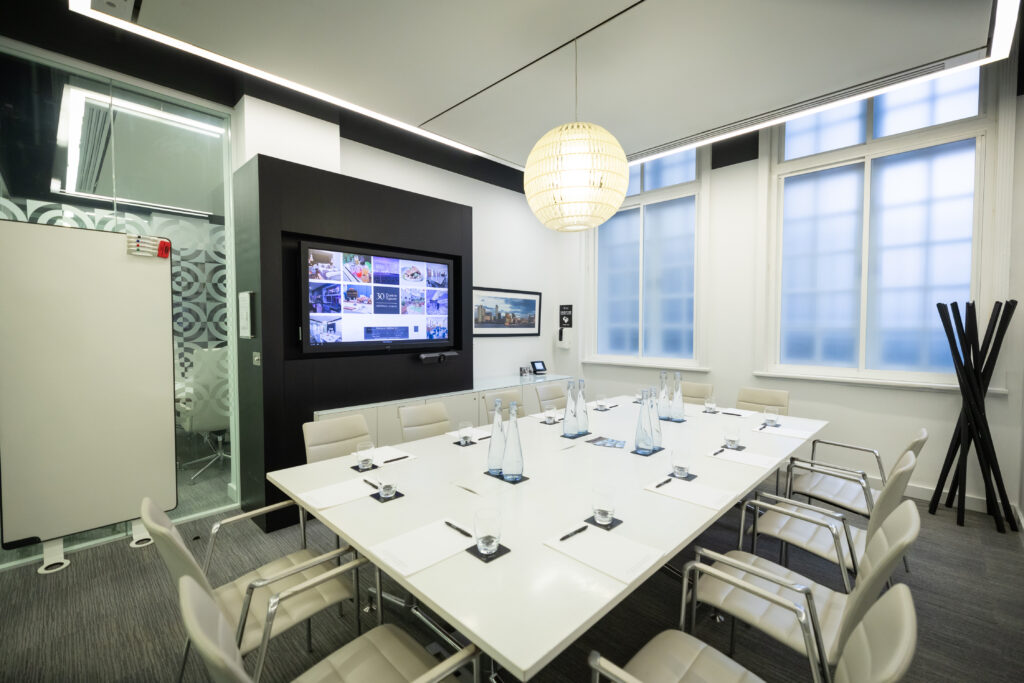
A good kick-off meeting agenda has a clear shape: ease in, look ahead, do some real work together, then leave with commitments. This full-day example is a starting point. Move the timings around to suit your team.
If a full day feels like too much, a half-day version works well. Keep the welcome, the priorities session and the commitments, and shorten or drop the workshop.
Two things tend to make the biggest difference. Leave room for conversation, because the unplanned chats over coffee often matter as much as the sessions. And keep presentations short, so most of the day is spent talking with each other rather than being talked at.
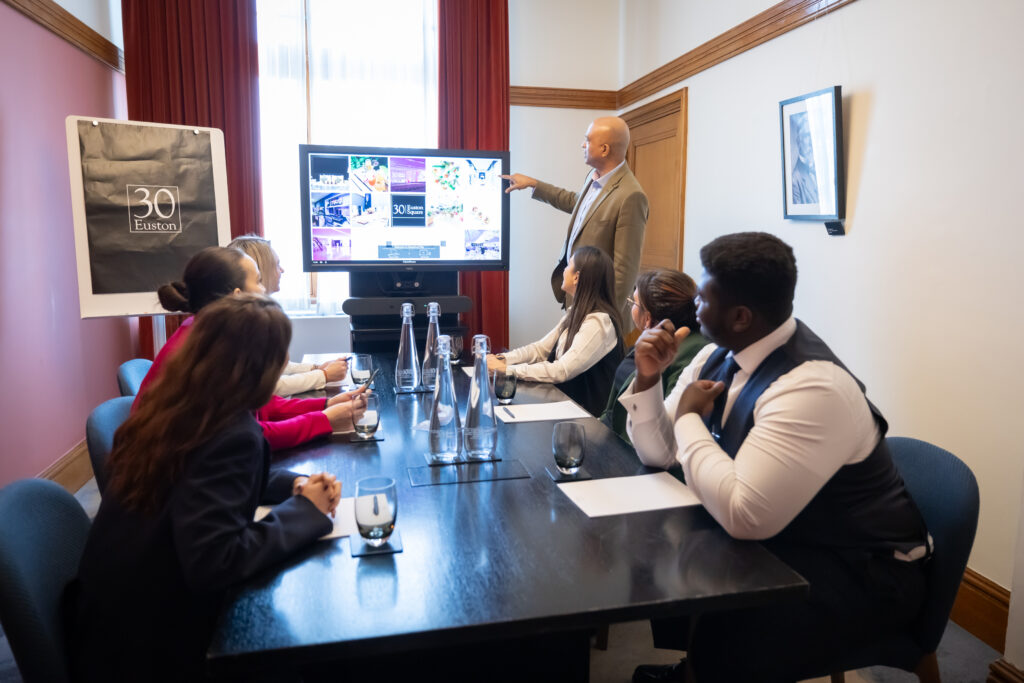
The real job of a Q1 kick-off meeting is to get everyone back up to speed together. A few small choices help more than you’d expect.
If some of your team are travelling in, we also have 41 boutique bedrooms on site, so people can arrive the evening before and start the day rested.
How long should a kick-off meeting be?
It depends on what you want to achieve. A focused team kick-off can work well as a half day, while a full day suits larger groups or sessions that bring several teams together.
When is the best time to hold a Q1 kick-off meeting?
Many teams choose the second or third week of January, once everyone is back and settled. Booking early gives you the best choice of dates and rooms.
What should a kick-off meeting agenda include?
A welcome and overview of the quarter ahead, a session to agree priorities, some hands-on group work, and a close that sets out who is doing what next. Build in breaks and time for conversation too.
How many people can you host at 30 Euston Square?
Our Heritage Rooms suit small teams, with Princes Gate taking up to 50 guests, and the Auditorium holds 120 to 300 guests.
Can you arrange catering and overnight stays?
Yes. Searcys manages and caters 30 Euston Square, so we can tailor catering to your day, and we have 41 boutique bedrooms on site for guests who want to stay.
Where is 30 Euston Square?
We’re at 30 Euston Square, London NW1 2FB, a short walk from Euston, King’s Cross, Euston Square and Warren Street stations.
If you’d like a hand choosing a date or a room, we’re happy to talk it through. Tell us how many people are coming and what you want the day to achieve, and we’ll suggest a space and a layout that fits. You can have a look at our meeting rooms first, or get in touch with the team whenever you’re ready.

Get ahead and prepare for 2027
Make the most of 2026 rates and secure your events for 2027 now. *
*T&Cs apply. Subject to availability.
